Have you ever gone on your phone for 5 minutes and ended up scrolling for an hour? I certainly have. These behaviours aren’t random, they are linked to how the brain is wired. One of the chemicals associated with this is dopamine. This is a hormone which is involved in motivation, learning and habits not just pleasure, it can affect our everyday behaviour.
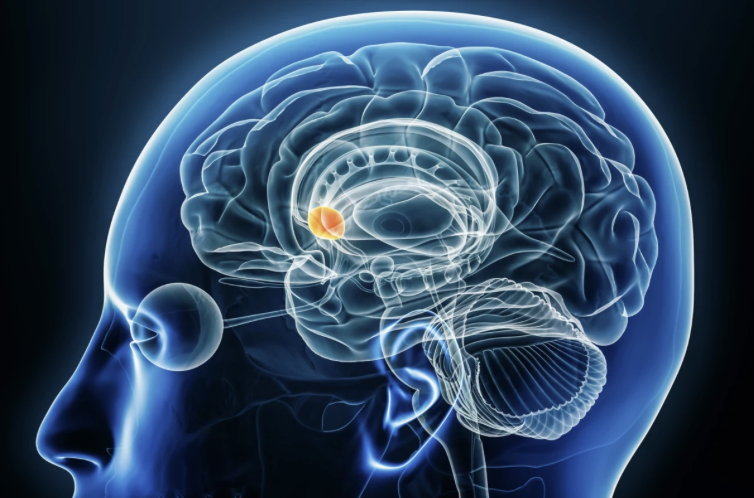
Dopamine is a monoamine neurotransmitter which is a chemical that sends signals between neurons. Dopamine is released from presynaptic neurons and binds to dopamine receptors. There are two major dopamine pathways: mesolimbic pathway (processes pleasure and reward) and mesocortical pathway (regulates cognitive functions and memory). It also plays a role in evolution as well, it helps humans seek food, create social connections and also helps us survive. The key regions involved in the brain's reward system are the Ventral Tegmental area (VTA), nucleus accumbens and the prefrontal cortex. The VTA is a source of dopaminergic neurons, the nucleus accumbens receives dopamine and the prefrontal cortex also receives dopamine from the VTA. Dopamine release increases the likelihood that a certain behaviour will be repeated and spikes when outcomes are better than expected: this is called reward prediction error.
Habits are learned behaviours that are stored in neural circuits and repeated dopamine release can strengthen synaptic connections (long term potentiation). This is linked to the ‘habit loop’: cue -> behaviour -> reward. It is supported by changes in the brain structure and connectivity. The basal ganglia are subcortical brain structures that transition actions from conscious, goal directed behaviour to automatic, habitual routines. They facilitate routine execution using the caudate tail for stable, automated habits and the striatum for learning. Dopamine acts as a critical modulator for the basal ganglia and strengthens the direct pathway (facilitating movement).
Dopamine can also support reinforcement learning and its signals can help the brain distinguish useful from unhelpful actions. This links to academic learning and how repetition plus feedback strengthens memory pathways. Digital platforms exploit these reward systems using notifications and variable reinforcement. They are designed to trigger dopamine release and this comes from behaviour psychology which is why scrolling on social media or playing video games can feel ‘addictive; as the uncertainty keeps the brain engaged. Each time the brain receives rewards the mesolimbic pathway is activated and over time just seeing your phone vibrate can trigger a dopamine release. Frequent dopamine releases can overload reward systems and lead to shorter attention spans as the prefrontal cortex which is responsible for decision making struggles to compete with rapid rewards.
There are misconceptions in science: dopamine is not a happiness chemical but a learning and motivation signal. Habits that we develop are also not purely conscious choices as they involve unconscious neural processes as well. With all this knowledge of dopamine we can use it to design better habits. Understanding brain biology can support better decision making, the teenage brain is highly adaptable which means that habits and behaviours are not fixed but can be reshaped with consistent practice. The brain is a powerful, adaptable thing and you need to work with it and not against it.